Page Not Found
Page not found. Your pixels are in another canvas.

A list of all the posts and pages found on the site. For you robots out there is an XML version available for digesting as well.
Page not found. Your pixels are in another canvas.
About me
This is a page not in th emain menu
My summer PhD GRA student (Aditya Pujari, Yale University) won the “Best Student Presentation Award” at the LANL Center for Space and Earth Science (CSES) Symposium. Aditya did a wonderful job working on my CSES Rapid Response R&D project this summer. Congratulations Aditya!
When: August 14th 2025 | 14:45 - 15:00
Where: J. Robert Oppenheimer Center, Jemez/Cochiti Room (TA-03 Bldg 0207-218)
Title: The role of cometary impact-generated fractures on organics transport in Titan’s crust
🚨Call for #AGU25 abstracts!🚨 Is your research related to exploring the martian subsurface/ interior? Look no further than the #NewMarsUnderground! Abstract submission deadline is 30July 2025. Link to the session: agu.confex.com/agu/agu25/pr... #Mars
— Dr. John P. Ortiz (@johnportiz14.bsky.social) July 1, 2025 at 11:56 AM
[image or embed]
🚨 New short article! 🚨 We determined that underground methane, if present at Jezero crater, could be collected by Perseverance drilled cores at certain times/seasons. However, sample tubes would need to be capped faster than is correctly done to preserve pore gases. #Mars bit.ly/4nnLZv3
— Dr. John P. Ortiz (@johnportiz14.bsky.social) June 30, 2025 at 8:49 AM
[image or embed]
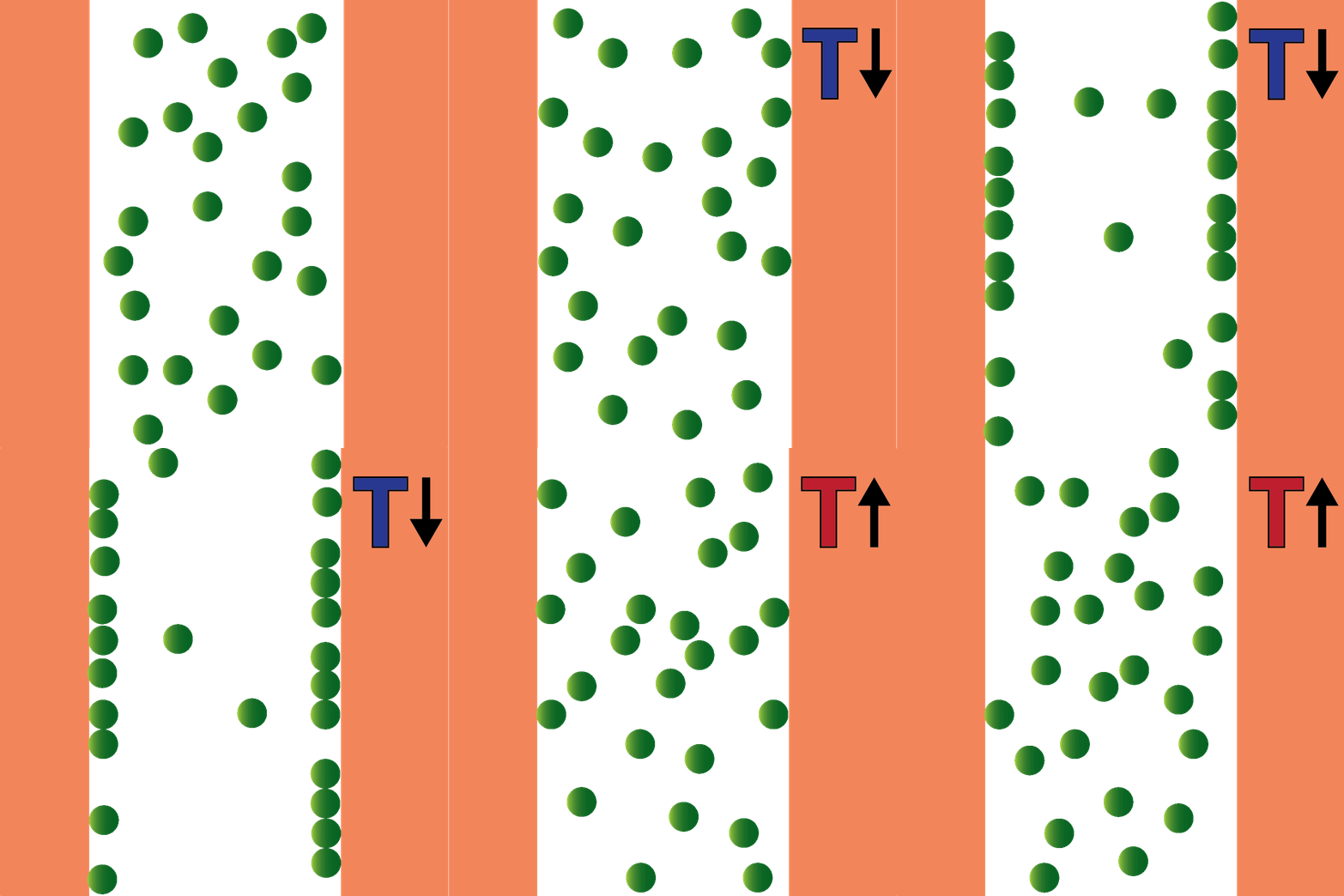
🚨 New Year, New Article! 🚨 Gas diffusion-adsorption in zeolitic rocks behaves counter-intuitively when partially saturated. This has implications for radionuclide transport monitoring, and possibly even methane transport on Mars. doi.org/10.1016/j.je...
— Dr. John P. Ortiz (@johnportiz14.bsky.social) January 1, 2025 at 11:44 AM
[image or embed]
Title: The New Mars Underground: Fluids, Volatiles, and the Future of Mars Exploration
My first time as a session chair at #AGU24 was a great success! Turns out a lot of people care about subsurface processes on Mars!
— Dr. John P. Ortiz (@johnportiz14.bsky.social) December 9, 2024 at 8:05 PM
[image or embed]
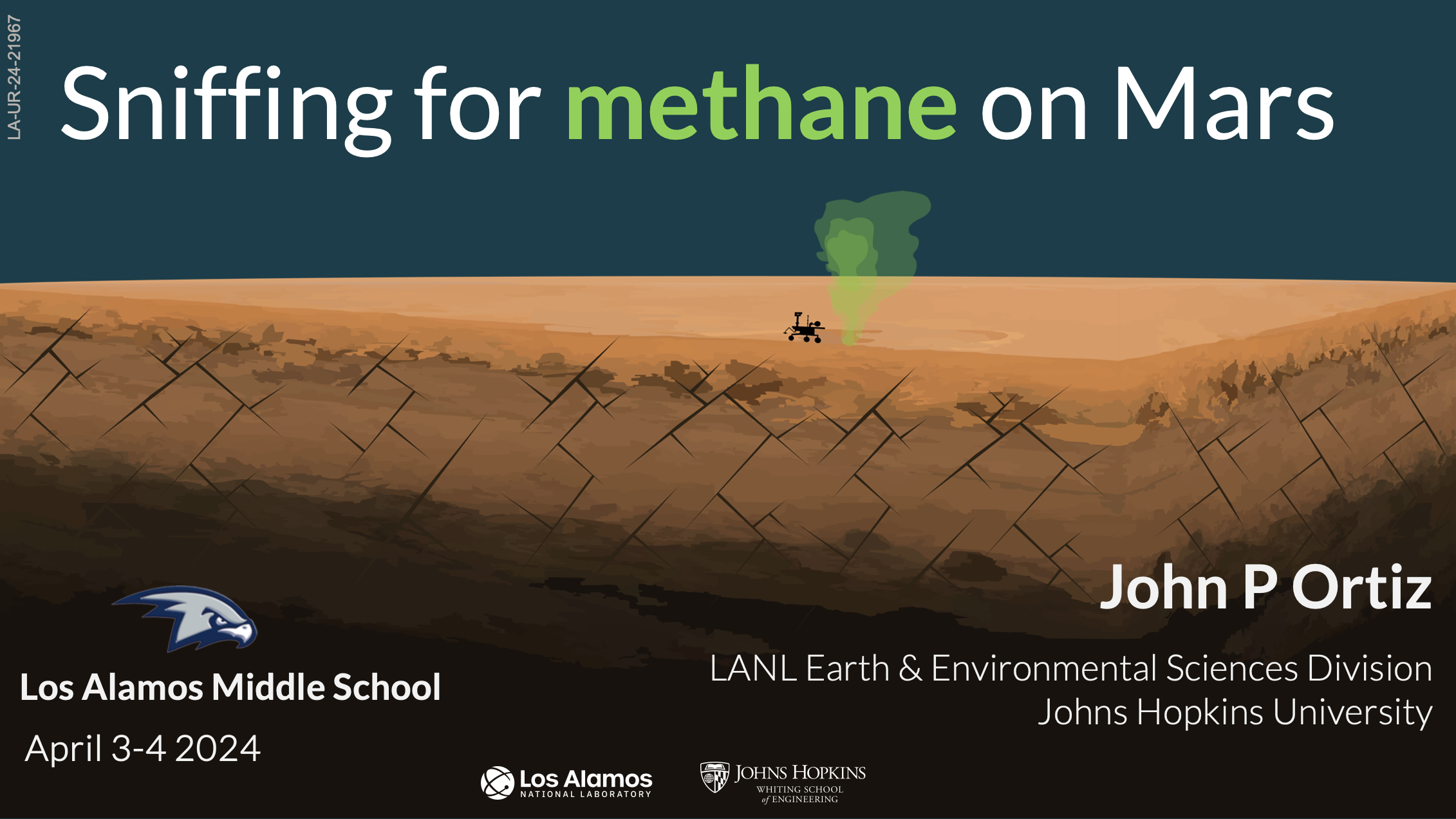
Delivered a series of five presentations and led discussions over two days on measuring atmospheric methane on Mars with the Curiosity rover to several 7th and 8th grade classes of Life Sciences and Astronomy students at Los Alamos Middle School.
This was a great experience – the students were engaged and asked really thoughtful questions!
When: April 3-4
Where: Los Alamos Middle School
Title: Sniffing for Methane on Mars
so excited to have successfully defended my doctoral dissertation yesterday! it was a wonderful journey https://t.co/D1fcxtz9RT
— John P. Ortiz (@JohnPOrtiz14) March 20, 2024
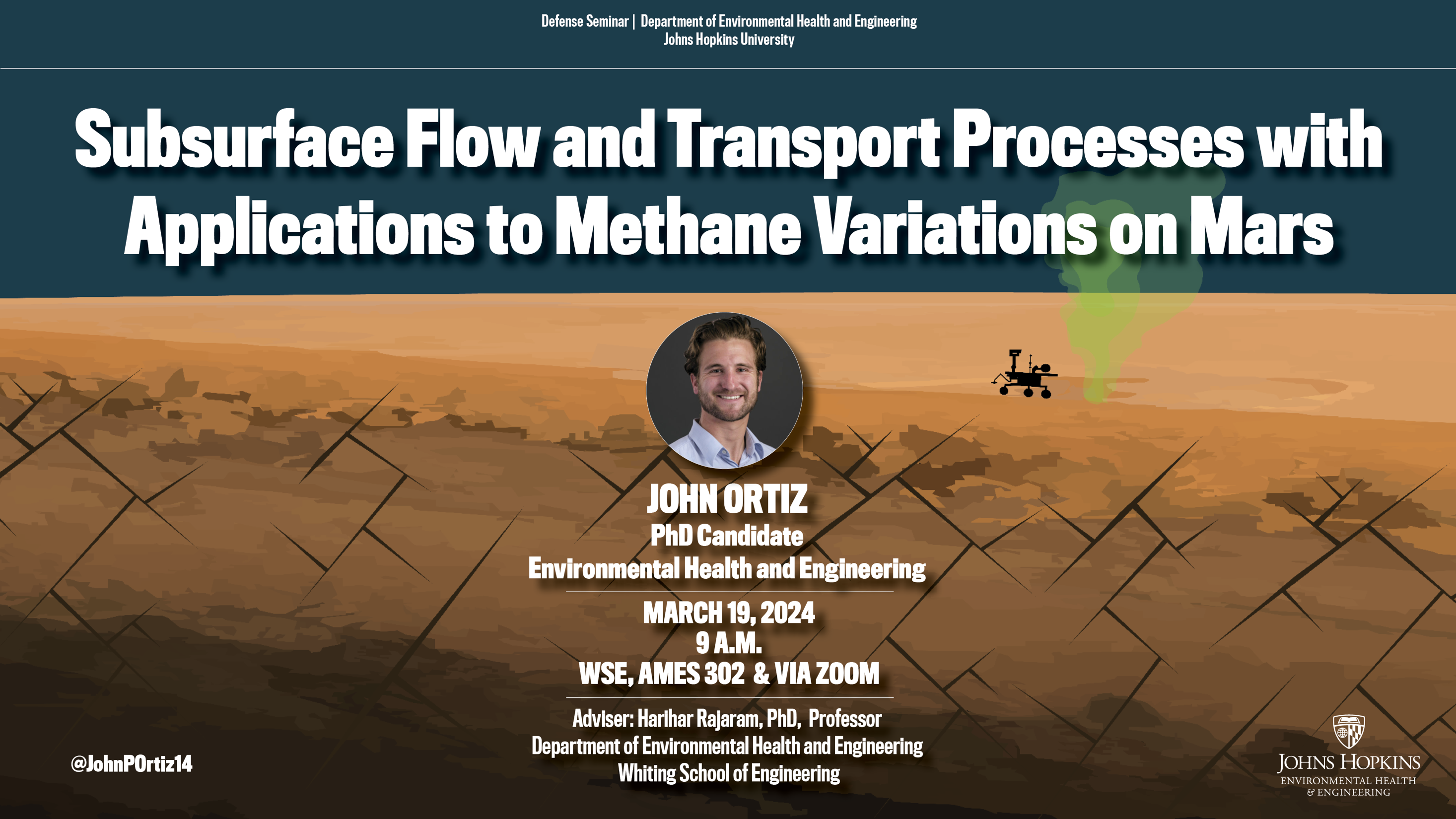
Title: Subsurface Flow and Transport Processes with Applications to Methane Variations on Mars
Adviser: Harihar Rajaram
Date: March 19th, 2024 at 9 am
Location: Ames 302 (Johns Hopkins University) and via Zoom
Zoom: ZOOM LINK
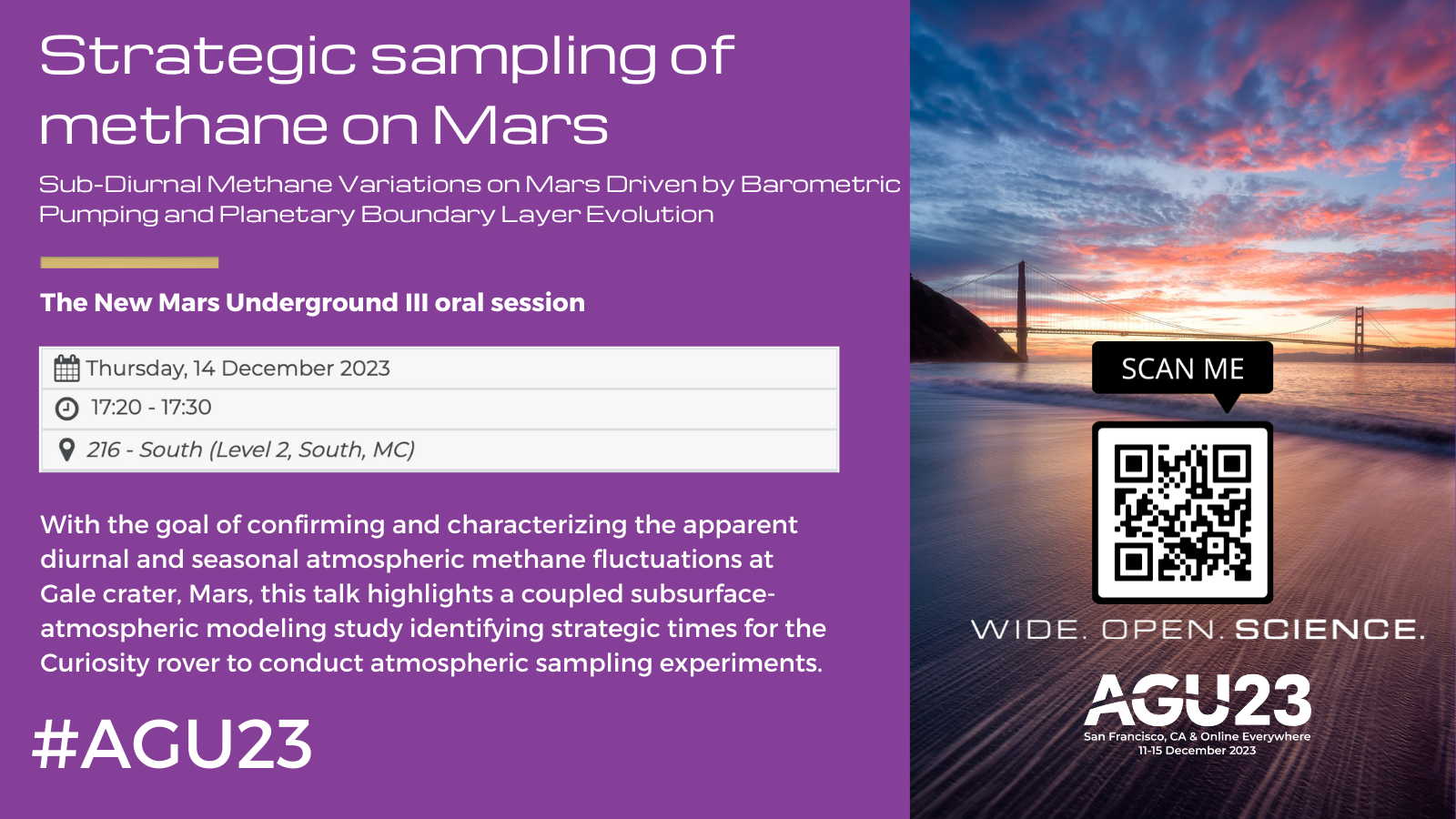
I will be delivering a talk at the AGU Fall Meeting 2023 for the New Mars Underground III oral session. I will be presenting on recent work to determine strategic sampling times for the Curiosity rover to collect atmospheric methane samples in order to constrain diurnal and seasonal methane fluctuations.
https://agu.confex.com/agu/fm23/meetingapp.cgi/Paper/1320513
When: Thursday December 14th 2023 | 17:20 - 17:30 (PST)
Where: 216 - South (Level 2, South, Moscone Center)
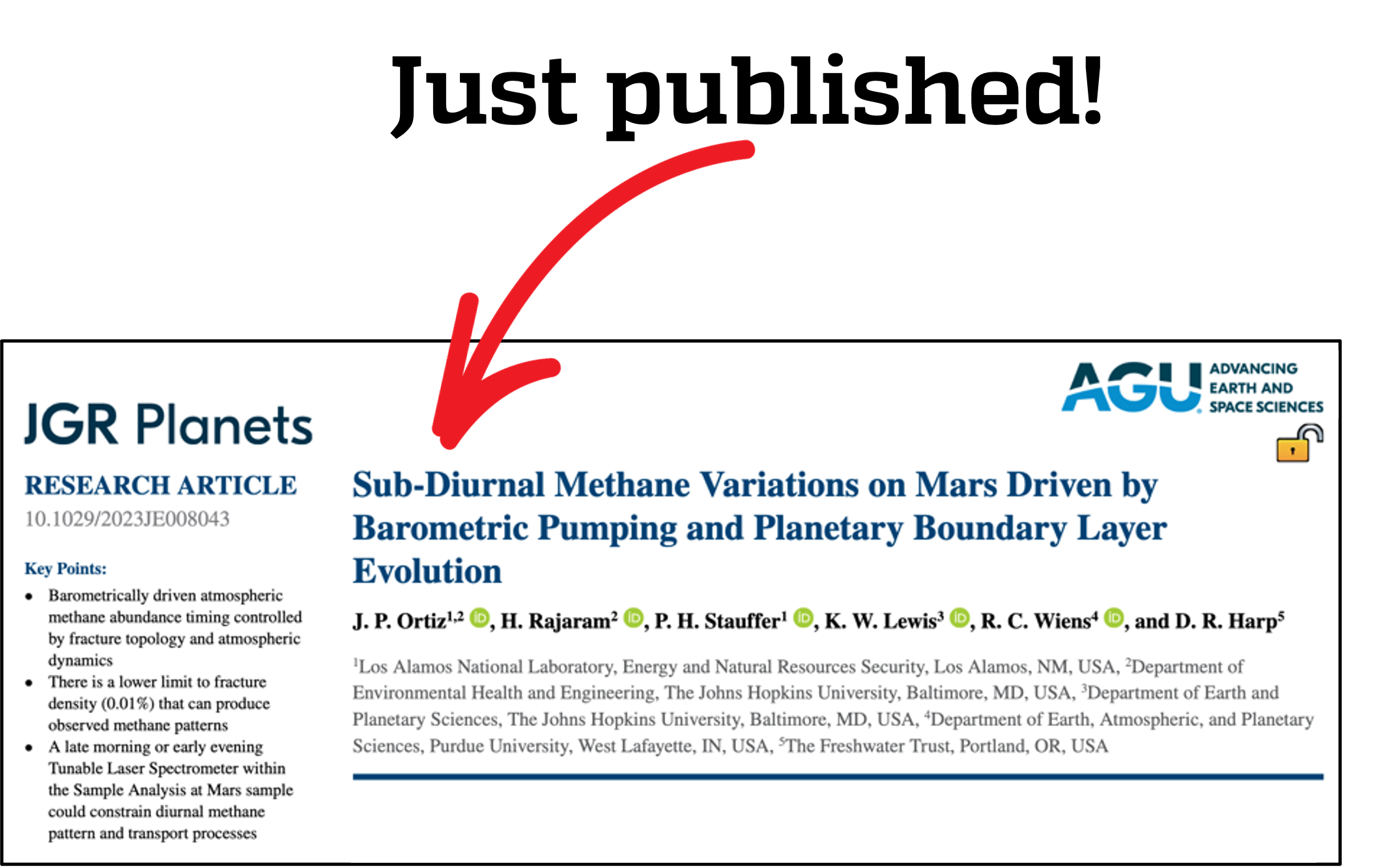
Title: Sub-Diurnal Methane Variations on Mars Driven by Barometric Pumping and Planetary Boundary Layer Evolution
At @theAGU and interested in Mars? Come see my talk today in The New Mars Underground session aimed at identifying strategic times for @MarsCuriosity to collect atmospheric samples! #AGU2023 pic.twitter.com/ddeb1ofAyW
— John P. Ortiz (@JohnPOrtiz14) December 14, 2023
Abstract:
In recent years, the Sample Analysis at Mars (SAM) instrument on board the Mars Science Laboratory (MSL) Curiosity rover has detected methane variations in the atmosphere at Gale crater. Methane concentrations appear to fluctuate seasonally as well as sub-diurnally, which is difficult to reconcile with an as-yet-unknown transport mechanism delivering the gas from underground to the atmosphere. We consider barometrically-induced transport of methane from an underground source to the surface, modulated by temperature-dependent adsorption as a mechanism to potentially explain the fluctuations. The subsurface fractured-rock seepage model is coupled to a simplified atmospheric mixing model to provide insights on the pattern of atmospheric methane concentrations in response to transient surface methane emissions, as well as to predict sub-diurnal variation in methane abundance for the Northern Summer period, which is a candidate time frame for Curiosity’s potentially final sampling campaign. The best-performing scenarios indicate a significant, short-lived methane pulse just prior to sunrise, the detection of which by SAM-TLS would be a potential indicator of the contribution of barometric pumping to Mars’ atmospheric methane variations.
I will be delivering a talk at the LANL Center for Space and Earth Science (CSES) Symposium.
When: Wednesday August 23rd 2023 | 14:45 - 15:00
Where: J. Robert Oppenheimer Center, Jemez/Cochiti Room (TA-03 Bldg 0207-218)
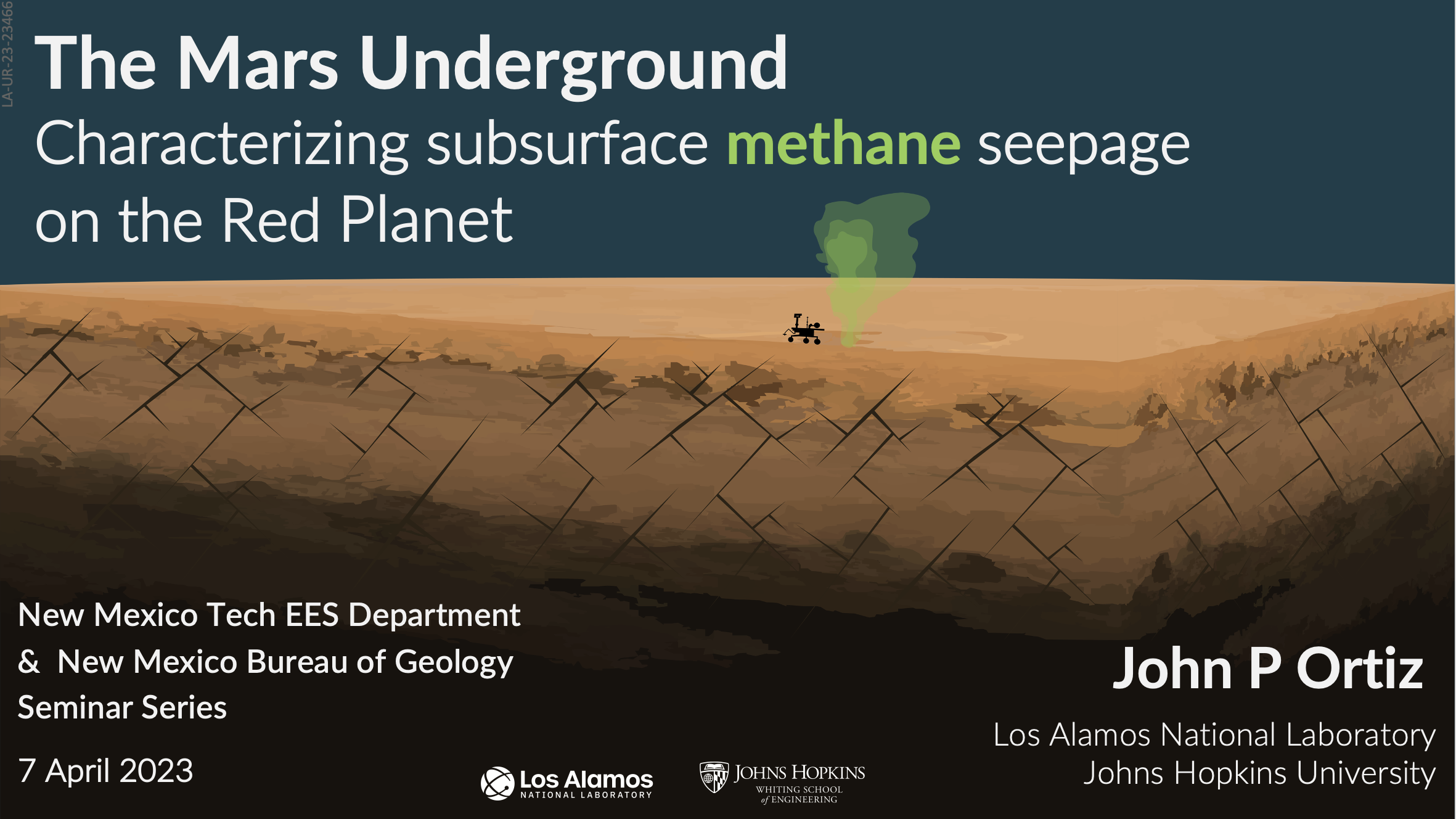
Title: The Mars Underground: Characterizing methane seepage on the Red Planet
Abstract:
In recent years, the Sample Analysis at Mars (SAM) instrument on board the Mars Science Laboratory (MSL) Curiosity rover has detected methane variations in the atmosphere at Gale crater. Methane concentrations appear to fluctuate seasonally as well as sub-diurnally, which is difficult to reconcile with an as-yet-unknown transport mechanism delivering the gas from underground to the atmosphere. We consider barometrically-induced transport of methane from an underground source to the surface, modulated by temperature-dependent adsorption as a mechanism to potentially explain the fluctuations. The subsurface fractured-rock seepage model is coupled to a simplified atmospheric mixing model to provide insights on the pattern of atmospheric methane concentrations in response to transient surface methane emissions, as well as to predict sub-diurnal variation in methane abundance for the Northern Summer period, for which we propose two strategic SAM-TLS samples during Curiosity’s potentially final sampling campaign.
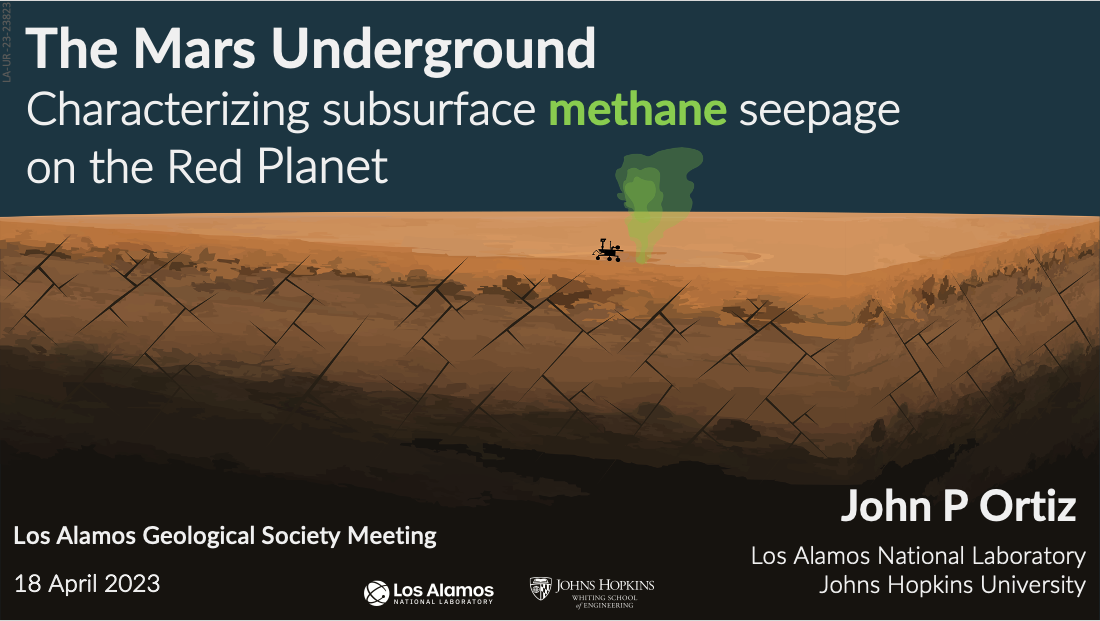
I will be delivering a talk for the April meeting of the Los Alamos Geological Society (LAGS). The talk will feature results from a recent, previously-published article on Mars methane variations, as well as ongoing work aimed at determining the optimal times to collect atmospheric samples as Curiosity nears its end of life.
When: Tuesday April 18th | 7 - 8 pm
Where: Zoom (link provided in the April LAGS newsletter)
Title: The Mars Underground: Characterizing subsurface methane seepage on the Red Planet
Abstract:
The existence of methane on Mars is a topic of significant interest because it is a potential biosignature – a sign of past or present life. General consensus is that, whether the source of methane is biogenic or abiogenic, it is most likely generated underground. To date, neither the source of methane on Mars nor the mechanism for transmission from the subsurface to the atmosphere are fully understood. Another part of this mystery is that measurements of atmospheric methane collected by Curiosity rover indicate that concentrations vary both seasonally and over short time scales (i.e., from hours to a couple sols). As the Curiosity rover nears the end of its life, onboard power becomes an increasing concern, and the pump life of the atmospheric sampler becomes a highly valuable resource. In order to balance these concerns, as well as the needs of other science areas of the mission, we need to be strategic in the choice of times that Curiosity collects its remaining samples.
In the first part of this talk, I will present numerical flow and transport simulations of deeply-sourced methane venting to Mars’ atmosphere via barometric-pressure pumping – a common process on Earth whereby atmospheric fluctuations progressively pull underground gases upward through fracture networks to the surface. We propose that this could be an effective mechanism to explain how deep underground methane reaches the atmosphere and produces the short-term variations observed.
In the second part of this talk, I will discuss ongoing work that uses these barometric pumping simulations to try to predict optimal times for Curiosity to collect methane samples. The simulations incorporate more advanced physics and atmospheric coupling in order to identify potential timing of experiments that would maximize the scientific returns of the final stage of Curiosity’s mission.
Speaker Bio:
John Ortiz is a Ph.D. Candidate in Environmental Engineering at Johns Hopkins University, and is advised by Dr. Harihar Rajaram. He received a B.A. in Earth Science with Honors from Dartmouth College in 2014, where he wrote an undergraduate thesis on quantifying regional sediment flux from observations of migrating sandbars along the Oregon and Washington coast. He then received a M.Sc. in Hydrogeology from New Mexico Institute of Mining & Technology in 2017, where he was advised by Dr. Mark Person on an investigation of the effects of fault zone properties on induced seismicity caused by deep wastewater injection. Upon graduating from New Mexico Tech, he started working at LANL in the EES-16 (Energy and Natural Resources Security; previously Computational Earth Science) group as a Post-Master’s student, where he supported global security and non-proliferation missions by developing models of radionuclide gas transport in fractured rock in order to detect clandestine underground nuclear tests. John currently works at LANL in EES-16 on a joint appointment with Johns Hopkins. In 2021, he received a 3-year Planetary Science Student Fellowship from the Center for Earth and Space Science (CSES) at LANL to investigate methane seepage on Mars for the remainder of his Ph.D.
Short description of portfolio item number 1
Short description of portfolio item number 2
Cohn, N., Ruggiero, P., Ortiz, J. P., & Walstra, D. J. (2014). Investigating the role of complex sandbar morphology on nearshore hydrodynamics. Journal of Coastal Research, (70 (10070)), 53-58.
Ortiz, J. P. Quantifying regional sediment flux from observations of nearshore morphology in the Columbia River Littoral Cell. Dartmouth College Senior Honors Thesis Collection.
Zhang, Y., Edel, S. S., Pepin, J., Person, M., Broadhead, R., Ortiz, J. P., Bilek, S. L., Mozley, P. S., & Evans, J. P. (2016). Exploring the potential linkages between oil‐field brine reinjection, crystalline basement permeability, and triggered seismicity for the Dagger Draw Oil field, southeastern New Mexico, USA, using hydrologic modeling. Geofluids, 16(5), 971-987.
Ortiz, J. P. The Role of Fault-Zone Architectural Elements and Basal Altered Zones on Downward Pore Pressure Propagation and Induced Seismicity in the Crystalline Basement. New Mexico Institute of Mining and Technology.
Stauffer, P. H., Rahn, T. A., Ortiz, J. P., Salazar, L. J., Boukhalfa, H., & Snyder, E. E. (2018). Summary of a Gas Transport Tracer Test in the Deep Cerros Del Rio Basalts, Mesita del Buey, Los Alamos NM (No. LA-UR-17-31351). Los Alamos National Lab.(LANL), Los Alamos, NM (United States).
Harp, D. R., Ortiz, J. P., Pandey, S., Karra, S., Anderson, D., Bradley, C., Viswanathan, H., & Stauffer, P. H. (2018). Immobile pore-water storage enhancement and retardation of gas transport in fractured rock. Transport in Porous Media, 124(2), 369-394.
Stauffer, P. H., Rahn, T., Ortiz, J. P., Salazar, L. J., Boukhalfa, H., Behar, H. R., & Snyder, E. E. (2019). Evidence for high rates of gas transport in the deep subsurface. Geophysical Research Letters, 46(7), 3773-3780.
Harp, D. R., Ortiz, J. P., & Stauffer, P. H. (2019). Identification of dominant gas transport frequencies during barometric pumping of fractured rock. Scientific Reports, 9(1), 1-9.
Ortiz, J. P., Person, M. A., Mozley, P. S., Evans, J. P., & Bilek, S. L. (2019). The role of fault‐zone architectural elements on pore pressure propagation and induced seismicity. Groundwater, 57(3), 465-478.
Bourret, S. M., Kwicklis, E. M., Harp, D. R., Ortiz, J. P., & Stauffer, P. H. (2020). Beyond Barnwell: Applying lessons learned from the Barnwell site to other historic underground nuclear tests at Pahute Mesa to understand radioactive gas-seepage observations. Journal of Environmental Radioactivity, 222, 106297.
Petrie, E. S., Bradbury, K. K., Cuccio, L., Smith, K., Evans, J. P., Ortiz, J. P., Kerner, K., Person, M., & Mozley, P. (2020). Geologic characterization of nonconformities using outcrop and core analogs: hydrologic implications for injection-induced seismicity. Solid Earth, 11(5), 1803-1821.
Avendaño, S. T., Harp, D. R., Kurwadkar, S., Ortiz, J. P., & Stauffer, P. H. (2021). Continental‐Scale Geographic Trends in Barometric‐Pumping Efficiency Potential: A North American Case Study. Geophysical Research Letters, 48(17), e2021GL093875.
Neil, C. W., Boukhalfa, H., Xu, H., Ware, S. D., Ortiz, J., Avendaño, S., Harp, D. R., Broome, S., Hjelm, R. P., Brug, W. P., & Stauffer, P. H. (2022). Gas diffusion through variably-water-saturated zeolitic tuff: Implications for transport following a subsurface nuclear event. Journal of Environmental Radioactivity, 250, 106905.
Ortiz, J. P., Rajaram, H., Stauffer, P. H., Harp, D. R., Wiens, R. C., & Lewis, K. W. (2022). Barometric Pumping Through Fractured Rock: A Mechanism for Venting Deep Methane to Mars' Atmosphere. Geophysical Research Letters, 49(14), doi:10.1029/2022GL098946.
Ortiz, J. P., Rajaram, H., Stauffer, P. H., Lewis, K. W., Wiens, R. C., & Harp, D. R. (2024). Sub-diurnal methane variations on Mars driven by barometric pumping and planetary boundary layer evolution. Journal of Geophysical Research: Planets. 129, e2023JE008043. doi:10.1029/2023JE008043.
Neil, C. W., Swager, K. C., Bourret, S. M., Ortiz, J. P., & Stauffer, P. H. (2024). Rethinking porosity-based diffusivity estimates for sorptive gas transport at variable temperatures. Environmental Science & Technology. doi:10.1021/acs.est.4c04048.
Ortiz, J. P., Neil, C. W., Rajaram, H., Boukhalfa, H., & Stauffer, P. H. (2025). Preferential adsorption of noble gases in zeolitic tuff with variable saturation: A modeling study of counter-intuitive diffusive-adsorptive behavior. Journal of Environmental Radioactivity. 282, 107608. doi:10.1016/j.jenvrad.2024.107608.
Neil, C. W., Eldridge, D. L., Miller, H., Ortiz, J. P., Stauffer, P. H., Rahn, T., Broome, S. T., Boukhalfa, H., & Euler, G. G. (2025). Explosive byproduct gas transport through sorptive geomedia. Transport in Porous Media, 152, 80. doi:10.1007/s11242-025-02212-1.
Lucero, D. D., Bourret, S. M., Ortiz, J. P., Fritz, B. G., Bodmer, M. A., Heath, J. E., ... & Stauffer, P. H. (2025). Permeability scaling relationships of volcanic tuff from core to field scale measurements. Scientific Reports, 15(1), 12938.
Ortiz, J. P., Lewis, K. W., Wiens, R.C., Stauffer, P. H., Harp, D. R., & Rajaram, H. (2025). Modeling barometric pumping of martian methane: Implications for Perseverance sample timing and gas loss from drilled cores. Icarus . 441, 116702. doi:10.1016/j.icarus.2025.116702.
Neil, C. W., Eldridge, D. L., Miller, H. D., Ortiz, J. P., Fritz, B. G., Euler, G. G., Stauffer, P. H., & The PE1 Team. (2026). Linking Laboratory and Field Observations of Carbon Dioxide Transport at the Nevada National Security Site. ACS Omega. doi:10.1021/acsomega.6c02107.
Ortiz, J. P., Lucero, D. D., Rougier, E., Knight, E. E., Bourret, S. M., Fritz, B. G., Bodmer, M. A., Heath, J., Neil, C. W., Boukhalfa, H., Kuhlman, K., Otto, S., Ezzedine, S., Roberts, B. L., Choens, R. C., Zyvoloski, G. A., Stauffer, P. H., & The PE1 Team. (2026). Predicting multiphase flow and tracer transport for an underground chemical explosive test. Scientific Reports, 16. doi:10.1038/s41598-026-35868-w.
Fernando, B., Heldmann, J., Grey, B., Ortiz, J. P., Euser, B., Seligman, D., Kim, E., Colaprete, A., Alessi, E. M., Koschny, D., Cook, A., Green, J., King, P., Teng, S., Graninger, D., Goldberg, A., Cooke, W., Skrutskie, M. F., Schlaufman, K., Schmerr, N., Donahue, C. M., Schmidt, C. A., & Chanover, N. J. (2026). Observational planning for the August 5, 2026 Falcon 9 Upper Stage lunar impact. arXiv preprint. doi:10.48550/arXiv.2607.14625.
Abstract:
Examining nearshore sandbar behavior is highly relevant to understanding past and predicting future coastal change because of the role that these morphologic features play in regional sand budgets. However, because of the difficulty and expense of collecting nearshore bathymetric data, relatively few long-term data sets of sandbar morphology exist. At sites where sufficient data has been collected, a common phenomenon observed is a cyclic, multi-year offshore migration of sandbars. This cycle typically follows a general three-stage conceptual model of net offshore migration (NOM) originally proposed by Ruessink and Kroon (1994) whereby each individual bar is: (1) generated close to shore, (2) migrates seaward, and (3) decays at the outer margin of the nearshore zone. One such location where a clear NOM cycle has been observed is in the Columbia River Littoral Cell (CRLC). The CRLC is a high energy, dissipative coast located in northwest Oregon and southwest Washington which is characterized by fine sand and an intense wave climate. A beach morphology monitoring program that includes annual nearshore bathymetry surveys and quarterly subaerial beach topography measurements was initiated in 1997 (Ruggiero et al., 2005). Data from this long-term field effort indicates that there are large spatial and temporal differences in bar behavior throughout the littoral cell, but that in general there is a net offshore movement of the bars on interannual time scales. In this study, the high-resolution coastal profile data from the beach monitoring program are used to specifically evaluate bar dynamics along the Long Beach subcell of the CRLC. Parameters such as bar crest position from the shoreline, bar crest depth, and bar height have been extracted from the dataset and are being used to evaluate both spatial and temporal trends in bar morphology. Initial results indicate that NOM cycles have approximately three-year return periods in Long Beach. Further analysis will focus on the alongshore variability of these cycles within the subcell. The results from this project will improve our understanding of bar behavior on interannual to decadal timescales which, as previously described, is integral for improving our predictive capabilities of shoreline change.
Abstract:
Interest in reducing the risk of induced seismic events associated with unconventional oil/gas brine reinjection wells, supercritical CO2 sequestration, and other deep waste disposal activities has heightened with the six-fold increase of earthquake frequency in the midcontinent region of the U.S. during the past decade. Recent geologic mapping along the contact between the crystalline basement and basal reservoirs has revealed, in some instances, evidence of a highly weathered zone exhibiting ductile behavior. The present research integrates these new geologic field observations and hydrogeologic modeling to understand under what geologic settings downward fluid pressure propagation into crystalline basement occurs. Geologic field observations and core sampling have helped to constrain the host rock and fault-zone permeability architecture and inform numerical modeling efforts.
We present a suite of simulations that use an 8 km x 8 km x 10 km idealized three-dimensional hydrogeologic model to assess what fault-zone properties promote or deter the downward propagation of anomalous fluid pressures from an injection well into crystalline basement. The model includes an 80 m-thick reservoir underlain by 20 m of weathered basement and approximately 9.9 km of crystalline basement. We include one pumping well located 75 m from the fault zone (Q = 5000 m3/day). We used representative permeability levels for each layer while varying the permeability of the fault core and damage zones. We found that recent faulting within both the reservoir and basement rock layers had the greatest impact on pressure propagation, increasing the depth of significant (0.07 MPa) pressure migration to over 1 km depth, 5 times deeper than in the unfaulted reservoir condition. We also found that the presence of a relatively lower-permeability weathered basement horizon (kweathered zone = 0.1 kbasement) reduced the depth of the same pressure front by 350 m, and the depth of the 2.5 MPa pressure contour by a factor of 2. Thus, the present research highlights two dominant factors in controlling the depth of pressure migration into the crystalline basement: 1) continuous faulting in both basement and injection horizon (i.e. recent faulting), and 2) presence of a weathered basement confining unit beneath the injection reservoir horizon.
Abstract: Radionuclide gases produced by underground nuclear explosions (UNEs) can seep to the earth’s surface over periods of hours to months. Later-time gas transport (i.e. that transport not taking place immediately after the explosion) can represent a significant portion of radionuclide gas brought to the surface. The later-time gas seepage is driven by atmospheric pressure fluctuations (i.e. barometric pumping), which is a complicated phenomenon caused by many processes (i.e., atmospheric tides, weather patterns, latitude, lunar cycle, seasons). Predicting the arrival times of detectable quantities of such gases is important for verifying (non-)compliance with the Comprehensive Nuclear Test-Ban Treaty. Gas breakthrough times are highly sensitive to uncertainties associated with a variety of hydrogeologic parameters, including: rock type, fracture aperture, matrix permeability, porosity, and saturation). We conduct this research using a bilateral approach that combines laboratory gas experiments and numerical modeling to hone certain simplifying assumptions in our current models of gas transport. Using a gas diffusion cell, we are able to measure air pressure transmission through fractured tuff core samples while also measuring Xe gas breakthrough measured using a mass spectrometer. We can thus create synthetic barometric fluctuations akin to those observed in field tests and measure the associated gas flow through the fracture and matrix pore space for varying degrees of fluid saturation. We then attempt to reproduce the experimental results using numerical models in PLFOTRAN and FEHM codes to better understand the importance of different parameters on radionuclide gas transport. In so doing, we can better determine the appropriateness of several different common flow and transport model assumptions in representing these transport processes. This will aid us in our application of such models to larger, field-scale tests and improve our ability to predict surface gas breakthrough times.
Abstract:
Gas transport in unsaturated fractured media plays an important role in a variety of applications, including detection of underground nuclear explosions, transport from volatile contaminant plumes, shallow CO2 leakage from carbon sequestration sites, and methane leaks from hydraulic fracturing operations. Gas breakthrough times are highly sensitive to uncertainties associated with a variety of hydrogeologic parameters, including: rock type, fracture aperture, matrix permeability, porosity, and saturation. Furthermore, a couple simplifying assumptions are typically employed when representing fracture flow and transport. Aqueous phase transport is typically considered insignificant compared to gas phase transport in unsaturated fracture flow regimes, and an assumption of instantaneous dissolution/volatilization of radionuclide gas is commonly used to reduce computational expense. We conduct this research using a twofold approach that combines laboratory gas experimentation and numerical modeling to verify and refine these simplifying assumptions in our current models of gas transport. Using a gas diffusion cell, we are able to measure air pressure transmission through fractured tuff core samples while also measuring Xe gas breakthrough measured using a mass spectrometer. We can thus create synthetic barometric fluctuations akin to those observed in field tests and measure the associated gas flow through the fracture and matrix pore space for varying degrees of fluid saturation. We then attempt to reproduce the experimental results using numerical models in PLFOTRAN and FEHM codes to better understand the importance of different parameters and assumptions on gas transport. Our numerical approaches represent both single-phase gas flow with immobile water, as well as full multi-phase transport in order to test the validity of assuming immobile pore water. Our approaches also include the ability to simulate the reaction equilibrium kinetics of dissolution/volatilization in order to identify when the assumption of instantaneous equilibrium is reasonable. These efforts will aid us in our application of such models to larger, field-scale tests and improve our ability to predict gas breakthrough times.
Abstract:
Gas transport in unsaturated fractured media plays an important role in applications such as shallow CO2 leakage from carbon sequestration sites, methane leaks from oil and gas operations, and remediation of volatile contaminant plumes. Driven primarily by barometric pumping, the time scale of relevant gas transport can vary from months or years to the order of days depending on a variety of hydrogeologic parameters, including: rock type, fracture aperture, matrix permeability, porosity, and saturation. It is very difficult to use computationally expensive numerical simulations to make real-time predictions of gas transport when parameter uncertainty is high and/or there is potential for rapid transport. We propose a reduced-order model (ROM) of gas transport in fractured media as a means of reducing computational complexity and allowing quicker approximations of migration time scales to assist real-time decision-making as it concerns gas transport. We build our ROM using relationships from a parameter sensitivity study of a two-dimensional single-fracture numerical flow and transport model simulated using PFLOTRAN and FEHM codes. Our modeled flow results are benchmarked where appropriate by a corresponding analytical solution for the subsurface pressure response from a harmonically varying barometric pressure fluctuation at the surface. This ROM can aid in bracketing real-time estimates of gas transport and has the potential to be generalized to more complex three-dimensional and discrete fracture networks.
Abstract:
Barometric pressure variations are often one of the main drivers of gas transport in fractured rock, a process that is referred to as barometric pumping. Barometric pressure variations are complex, multi-frequency signals influenced by latitude, weather, elevation, lunar phase, time of year, and diurnal and semi-diurnal earth tides. However, our results indicate that it is often a subset of the pressure frequencies that lead to the vast majority of transport while the majority of frequencies result in minor or even insignificant transport. Identifying the dominant pressure frequencies for transport allow us to more simply and effectively characterize the potential for gas transport to the surface at different geographic locations. We will present barometric pressure decomposition analyses on gas transport in fractured rock.
Abstract:
Driven primarily by barometric pumping, the time scale of relevant gas transport in fractured geologic media can vary from years to the order of days depending on the strength of the barometric signal and a variety of hydrogeologic parameters, including: rock type, fracture aperture, matrix permeability, porosity, and saturation. Although discrete fracture networks (DFNs) improve representations of preferential flow along fractures, they have limitations in transport applications where molecular and pressure diffusion into the rock matrix cannot be ignored. We will present numerical simulations that combine a single discrete fracture with an explicitly meshed 3D cavity zone. We employ a dual-porosity formulation to represent the matrix attached to the fracture in order to accurately model barometric pumping. Such simulations highlight the relative importance of different macro- and micro-scale processes in fractured flow and transport models while also promising to reduce computation time of multiphase simulations.
Abstract:
Barometric pressure variations are often one of the main drivers of gas transport in fractured rock, a process that is referred to as barometric pumping. Barometric pressure variations are complex, multi-frequency signals influenced by latitude, weather, elevation, lunar phase, time of year, and diurnal and semi-diurnal earth tides. However, our results indicate that it is often a subset of the pressure frequencies that lead to the vast majority of transport while the majority of frequencies result in minor or even insignificant transport. Identifying the dominant pressure frequencies for transport allow us to more simply and effectively characterize the potential for gas transport to the surface at different geographic locations. We will present barometric pressure decomposition analyses on gas transport in fractured rock and discuss the implications for breakthrough and windows of exposure at the ground surface.
Abstract:
Gas transport through variably-saturated geologic media has important applications for nuclear nonproliferation, as noble gas detection is one of the best candidates for the verification of clandestine underground nuclear events. The transport properties of porous geologic media with respect to such gases are of fundamental importance in developing accurate predictive transport models to determine the origin of detected nuclear signatures. We therefore aim to characterize the diffusion of gaseous krypton, xenon, and sulfur hexafluoride (SF6) through intact porous rock with varying degrees of liquid saturation in order to quantify vapor diffusion coefficients and relate them to changes in rock saturation. We conducted a series of diffusion cell experiments using intact tuff cores at varying saturations. We fit the experimental results using Finite Element Heat and Mass (FEHM) numerical model simulations to calculate effective vapor phase diffusion coefficients for each gas and saturation. Results will be used to develop more accurate transport models for subsurface fission product releases, which have implications for treaty verification, repository science, and radioactive contaminant transport.
Presentation at the LYNM Quad-Laboratory All-Hands Meeting demonstrating how historical radionuclide measurement data from past underground nuclear tests can be used to validate barometric pumping transport models.
Abstract:
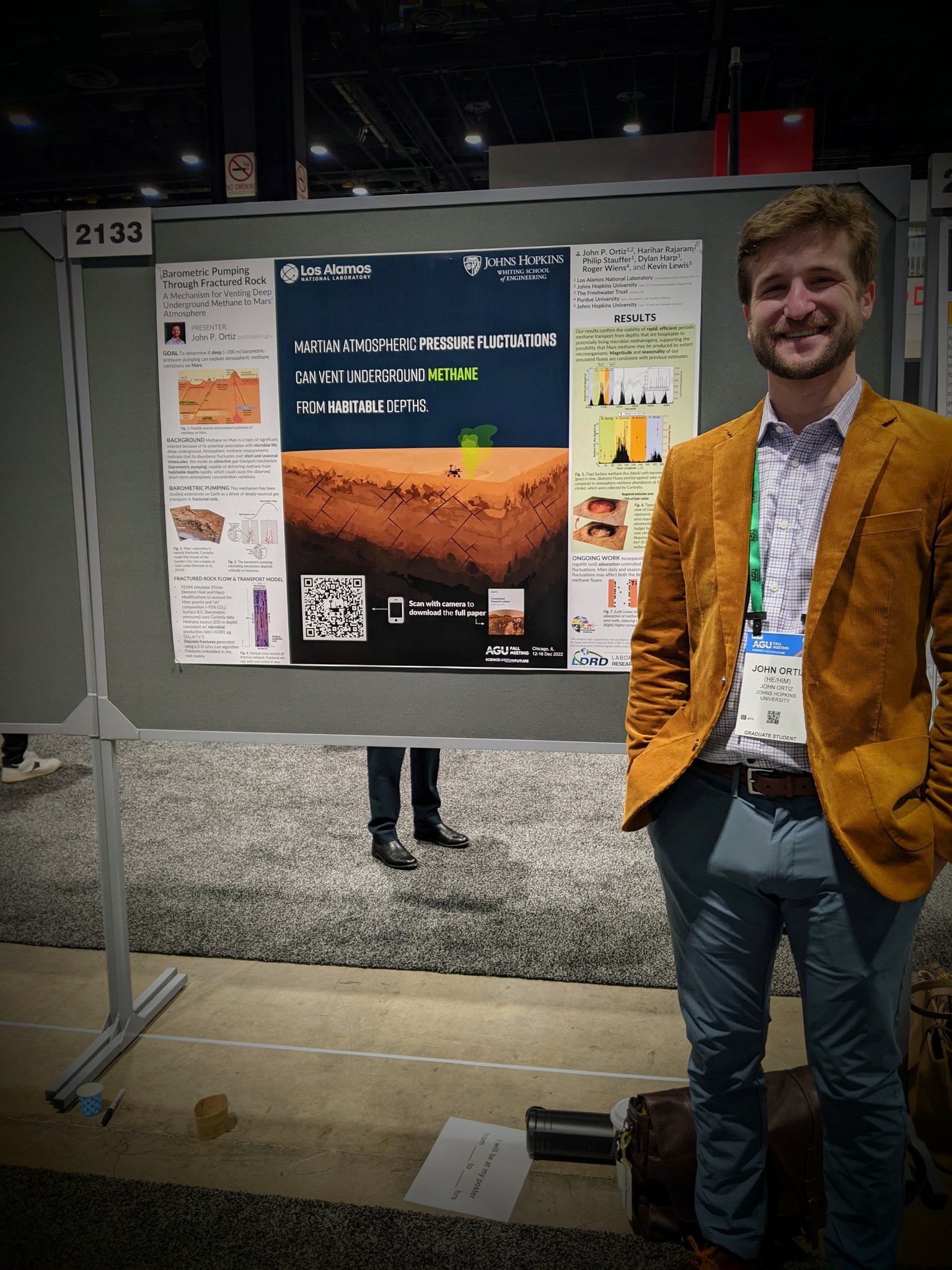
The existence of methane on Mars is a topic of significant interest because it is a potential biosignature. To date, neither the source of methane on Mars nor the mechanism for transmission from the subsurface to the atmosphere are fully understood. Most previous seepage simulations have invoked relatively shallow subsurface sources to explain observed methane signatures on Mars. We propose that barometric-pressure pumping – a common process on Earth whereby atmospheric fluctuations progressively pull underground gases upward to the surface – through fracture networks could be an effective mechanism for methane transport from the deep subsurface on Mars. Using atmospheric pressure data gathered by Curiosity as input, we simulate methane gas transport from depths of 200 m to the surface. Even with a deep source, our model reproduces the observed seasonality of atmospheric methane observed by Curiosity, and the simulated surface methane fluxes fall within the range of previous estimates derived from atmospheric observations. Because 200 m is the likely minimum hospitable depth for living methanogenic microbes, our fracture network model indirectly reinvigorates the possibility of a microbial source of methane on Mars.
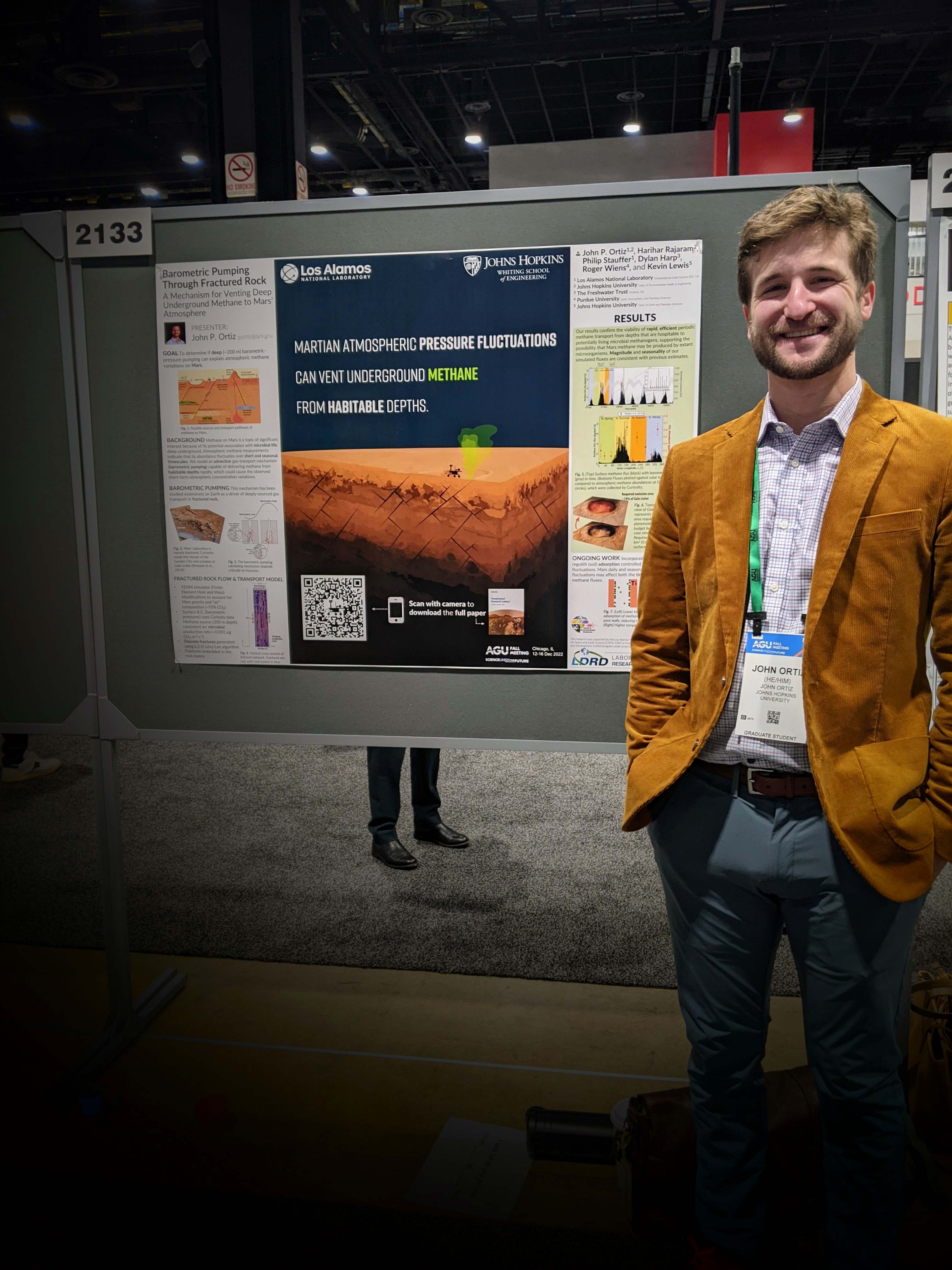
Presenting at AGU!
Presentation at the LYNM Program Technical Meeting introducing the Numerical Reduced-Order Multiphase Model (NROMM) software tool for making rapid predictions of underground nuclear event (UNE) gas seepage behavior.
Abstract:
In recent years, the Sample Analysis at Mars (SAM) instrument on board the Mars Science Laboratory (MSL) Curiosity rover has detected methane variations in the atmosphere at Gale crater. Methane concentrations appear to fluctuate seasonally as well as sub-diurnally, which is difficult to reconcile with an as-yet-unknown transport mechanism delivering the gas from underground to the atmosphere. We consider barometrically-induced transport of methane from an underground source to the surface, modulated by temperature-dependent adsorption as a mechanism to potentially explain the fluctuations. The subsurface fractured-rock seepage model is coupled to a simplified atmospheric mixing model to provide insights on the pattern of atmospheric methane concentrations in response to transient surface methane emissions, as well as to predict sub-diurnal variation in methane abundance for the Northern Summer period, for which we propose two strategic SAM-TLS samples during Curiosity’s potentially final sampling campaign.

Presentation at the LYNM Quad-Laboratory All-Hands Meeting discussing preferential adsorption behavior of xenon in variably-saturated zeolitic tuff, with implications for radionuclide transport and detection following underground nuclear events.
Invited presentation to the NASA SAM instrument team discussing how sub-diurnal methane variations observed by Curiosity rover can be explained through barometric pumping mechanisms coupled with planetary boundary layer dynamics.
Oral presentation at AGU Fall Meeting 2025 exploring how cometary impacts on Titan could generate fracture networks that facilitate the transport of organic materials between the surface and subsurface ocean, with implications for habitability and astrobiology.
Presentation of Los Alamos National Laboratory’s flow and transport predictions for Physics Experiment 1 at the LYNM Gas Transport Modeling Workshop held at Pacific Northwest National Laboratory.
Presentation at the LYNM (Low Yield Nuclear Monitoring) Quad-Laboratory All-Hands Meeting comparing numerical flow and transport simulations with multiyear borehole pressure and concentration data following the PE1-A physics experiment.
Selected to present at the prestigious 75th Lindau Nobel Laureate Meeting, where young scientists meet Nobel laureates for scientific exchange. This talk demonstrates how models originally developed for tracking radionuclide gas seepage from underground nuclear tests can provide insights into methane release mechanisms on Mars.
Presentation of Los Alamos National Laboratory’s predictions for gas seepage borehole pressure and radionuclide concentration measurements at the PE1 B and DL Predictions Meeting hosted at Pacific Northwest National Laboratory.
Presentation of cavity and near-field predictions for Physics Experiment 1-B and -DL at the PNNL-hosted predictions meeting, providing pre-test numerical modeling results to inform experimental design and data collection.
Undergraduate course, New Mexico Tech, Earth & Environmental Sciences Department, 2015
Developed lesson plans and led class lectures and field trips for 20+ students in intermediate and upper level undergraduate Earth Sciences lab sections. Taught lab sections for courses in Geomorphology and Stratigraphy & Paleontology with work load totaling 20 hrs/week.
Undergraduate course, Johns Hopkins University, Environmental Health & Engineering Department, 2019
Graded weekly homework assignments for 20+ upper-level undergraduate engineering students in an Introduction to Fluid Mechanics course. Occasionally taught course lectures as needed.